
Wood damage
Altered or deteriorated wood can have more than one cause. A careful evaluation helps frame what should be investigated.
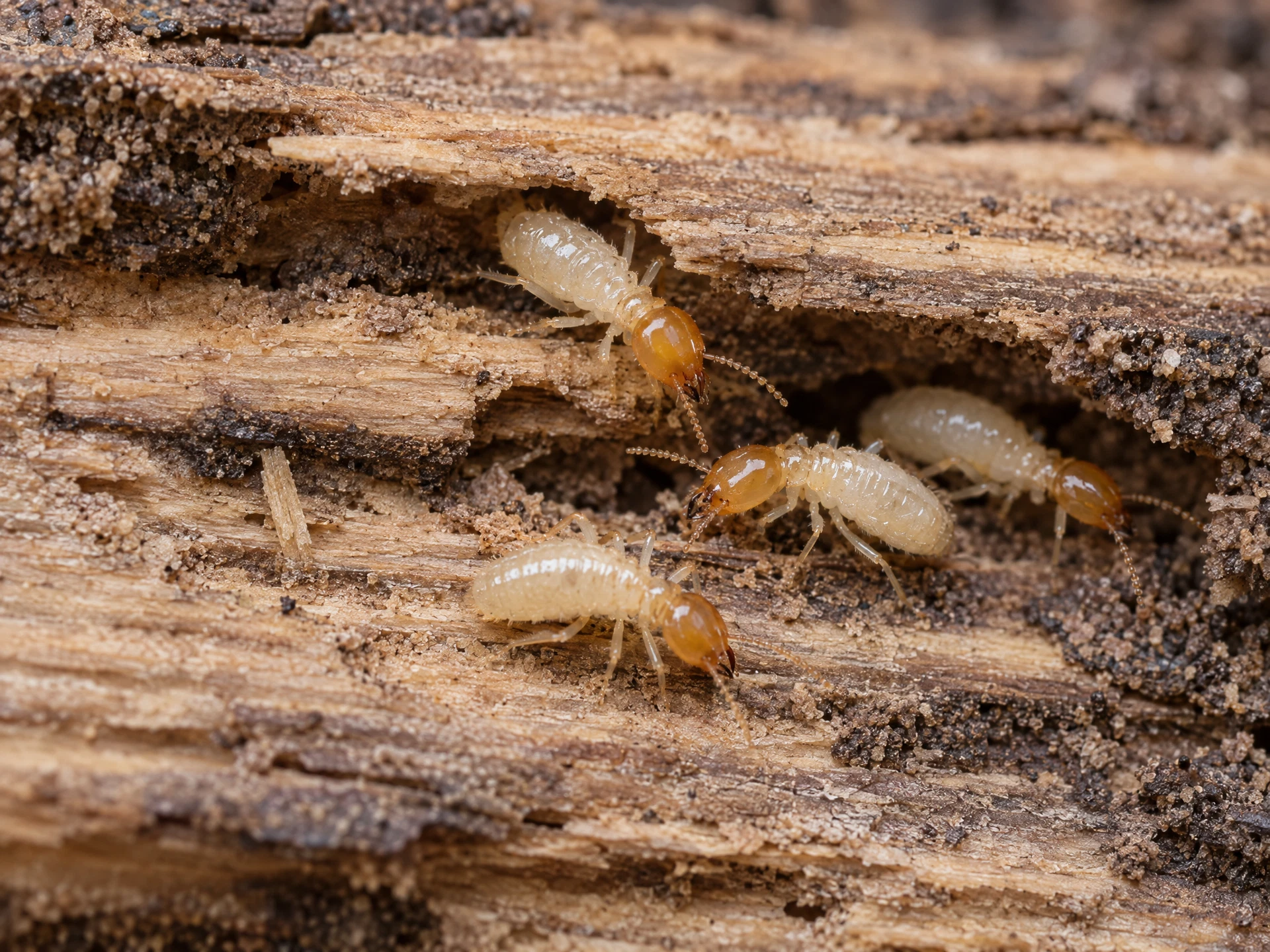
Wood and what affects it
Termites, carpenter ants and other wood-destroying organisms can leave clues in and around a structure. A targeted inspection helps you understand the visible signs and the next question to ask.
01 / 05
A wood-destroying organism (WDO) or pest inspection is a focused request—not a substitute for looking at the whole home. When termites, carpenter ants, powderpost beetles, or another wood-related pest concern is on your mind, our team looks at accessible areas for visible evidence and puts what is seen in plain context. It can be a useful part of a home purchase, or a sensible response to a condition you have noticed at a home you already own.
The purpose is not to make a fast diagnosis from a single mark in the wood. We consider the observable pattern: insect activity, mud-like shelter tubes, coarse debris near an entry point, altered or damaged wood, and the setting around it. Some clues merit a closer conversation; others may have causes unrelated to pests. The important thing is to distinguish an observation from an assumption.
02 / 05
Wood rarely tells its story alone. Carpenter ants, for example, are often associated with wood made damp by a current or old roof leak, a plumbing leak, or another moisture path. That does not mean every stained sill, soft board, or aging porch component points to an active infestation. Weather exposure, decay, past repairs, and everyday wear can look concerning until the surrounding conditions are considered.
That context is especially relevant in Chicagoland, where a home may have seen years of freeze-and-thaw weather, changing drainage, and deferred exterior maintenance. Accessible details such as roof runoff, grading, openings around exterior elements, and wood-to-soil contact can help frame the next question. A visible condition may point toward a repair discussion, a pest-management consultation, or simply a closer look at moisture management—not a conclusion before the facts support one.
What may prompt a closer look
Altered or deteriorated wood can have more than one cause. A careful evaluation helps frame what should be investigated.
Conditions in accessible areas may raise questions about termites, carpenter ants, powderpost beetles or other organisms.
Inspection findings can guide a conversation about specialist evaluation, treatment or repairs where appropriate.
03 / 05
A general home inspection offers a broad picture of the property’s accessible exterior, interior, structure, and major systems. A WDO/pest inspection has a narrower purpose: to address visible evidence and conditions connected with possible wood-destroying organisms. The two services can complement one another, but neither should be treated as an automatic stand-in for the other.
Let us know about a pest or wood concern when you schedule so the requested service and your questions are clear from the outset. You can also compare the wider range of residential services before booking. If the central question is a suspected moisture-related growth rather than insect activity, our mold testing information may help you decide which conversation fits the situation.
04 / 05
Bring us the details you have: where you saw the condition, when it appeared, whether water entered the area, and what work has already been done. We will explain accessible observations without inflating them into a worst-case scenario. If the evidence suggests a next step, that might involve an appropriate pest-management professional for treatment or a qualified repair specialist for the wood or moisture issue.
A visual inspection has real limits. Finished surfaces, insulation, stored belongings, landscaping, and inaccessible cavities can prevent an area from being seen. Conditions can also change after the visit. For those reasons, an inspection does not certify that pests are absent, guarantee future conditions, or replace treatment and repair decisions by the appropriate specialists. Homeowners looking for general identification guidance may find Illinois Extension’s carpenter-ant resource useful alongside a property-specific conversation.
05 / 05
Rojek Home Services serves buyers, sellers, and homeowners throughout Chicagoland. Whether you are considering a property in Joliet or reviewing a concern at a home in Alsip, we start with the building in front of us—not a canned conclusion based on a ZIP code. Explore our service area to see the counties and communities we serve.
Founder Mark Rojek’s construction background, together with his work as a firefighter and paramedic, informs a methodical approach to observing accessible conditions, assessing what needs attention, and communicating without needless alarm. It is a practical perspective, not a gimmick. Rojek is a team company; meet the team to learn about the people behind the work. Mark is the team member identified there as a Certified Master Inspector.
If a wood or pest concern is part of your property decision, schedule an inspection and tell us what you have noticed, where it is located, and whether you are buying, selling, or already living in the home.
The next conversation
Tell us about your property and what you most want to understand. We will help you choose the right inspection conversation.