Winter makes the timing visible
A DuPage County winter home purchase can put many decisions on a short clock. Radon testing deserves a place on that list, not because snow automatically proves a problem, but because the question is easier to address before closing. Radon is a colorless, odorless radioactive gas that occurs naturally in soil and rock. It can enter a home, and a visual walk-through cannot tell you what concentration may be present.
DuPage County's public-health department directs residents to state radon-testing resources. That local reminder is useful during a winter purchase: do not let a home's age, a recently finished lower level, or the absence of an odor decide the issue. A test answers a different question from the rest of the pre-closing checklist.
That distinction matters. A radon test is specialized testing, while a home inspection is a visual evaluation of readily accessible conditions. Pairing them can help a buyer keep both conversations organized: the visible condition of the home on one hand, and an indoor-air measurement on the other. It also avoids treating a clean-looking finished basement as evidence about radon.
What a reliable short-term test involves
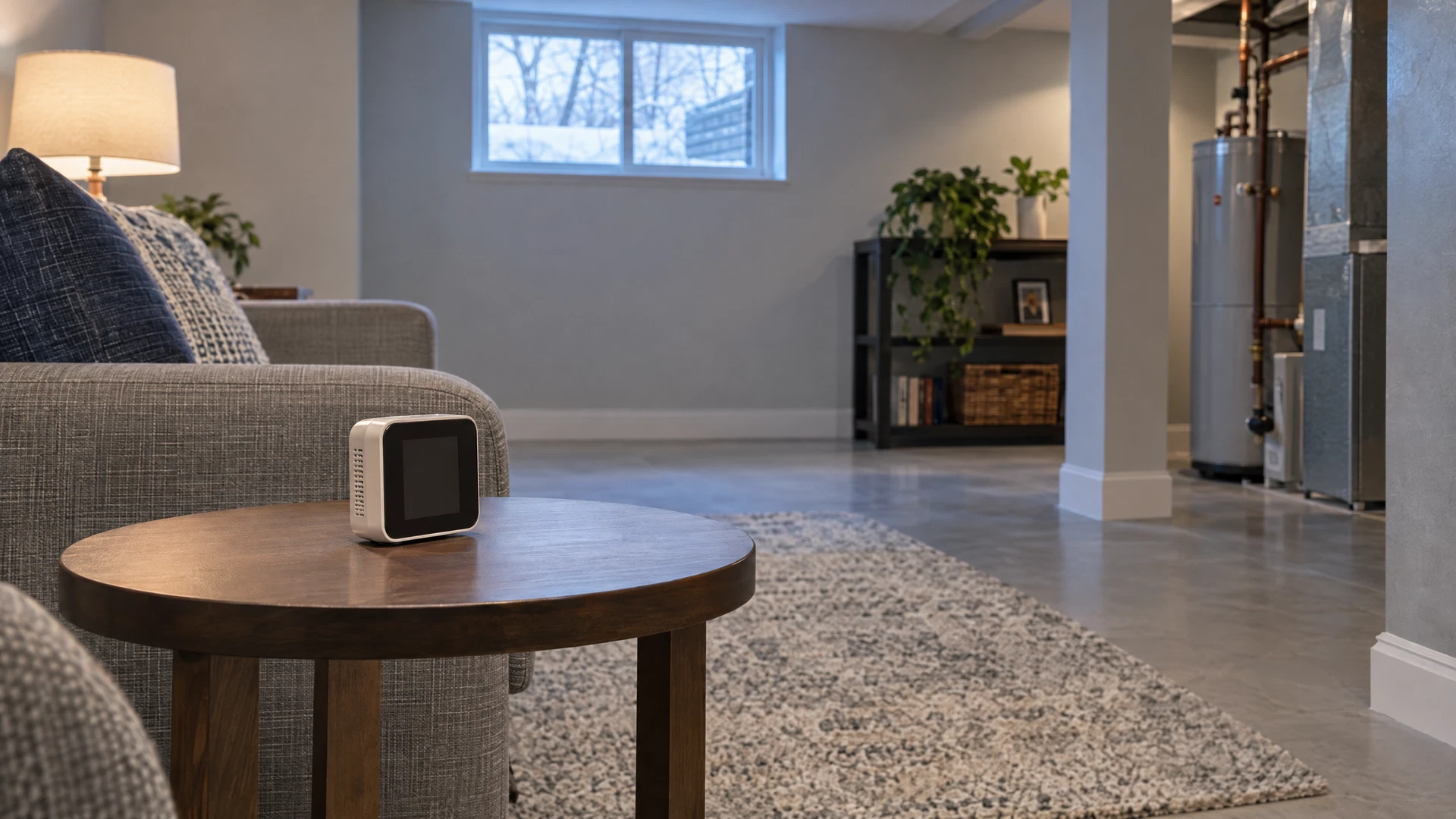
Real-estate timelines often call for a short-term test. EPA guidance says a test should run for at least 48 hours, and the type of device and testing approach should fit the transaction. Illinois guidance also addresses the lowest structural area that is suitable for occupancy. A finished basement may be the right location in one home; homes with different foundation areas may call for a different plan.
Winter can make closed-house conditions feel familiar, but the rules still matter. For a short test, windows and exterior doors should remain closed except for normal entry and exit, beginning at least 12 hours before testing and continuing through it. Heating should operate normally. Buyers and sellers should also know where the device will sit and avoid disturbing it. Those details support a usable result rather than a hurried number.
Before the monitor is deployed, confirm that everyone with access knows the closed-house rules. An open window, an exterior door left ajar outside normal entry, or moving the device can undermine the test. If those conditions cannot be confirmed, the sensible response may be to discuss a new test, not to draw a conclusion from an uncertain result.
Put a result in context
Radon levels can change from day to day and season to season. That means a short-term result is useful for a purchase decision, but it is not a promise of a home's year-round average or a reason to assume winter is always the highest reading. If a result raises questions, ask the testing professional what was measured, where the device was placed, and whether the stated testing conditions were maintained.
EPA recommends fixing a home when the average result is 4 picocuries per liter (pCi/L) or higher, and says buyers may consider action between 2 and 4 pCi/L. The next step is not a DIY repair during a final walk-through. Instead, use the report and your transaction team to discuss appropriate follow-up, documentation, and, when needed, a qualified radon mitigation professional.
Keep radon in the inspection conversation
Before the inspection window begins, ask whether radon testing can be scheduled alongside the larger appointment and when results are expected. Share any known prior radon results or mitigation-system information with the people involved in the transaction. For a broader winter buyer checklist, see what home buyers should watch for when house hunting in winter.
Rojek Home Services offers radon testing as a focused service for Chicagoland buyers and homeowners, including DuPage County. If you are weighing related home questions, explore basement moisture documentation and inspection add-on choices across the five-county area. When the timing is right, you can also schedule an inspection and ask how the available services fit your purchase plan.